AI’s Compute Crunch Pushes Data Centers Toward the Arctic
AI’s soaring demand for compute and power is driving hyperscalers to cold, remote regions while memory and packaging bottlenecks send hardware costs surging, reshaping who can compete.
AI’s hunger for power and hardware is starting to redraw the global map. As regulators and grids in traditional hubs push back, hyperscalers and infrastructure investors are steering data centers toward the Arctic and other cool, power-rich regions, even as a deepening memory shortage and rising equipment prices squeeze margins and threaten to slow AI adoption.
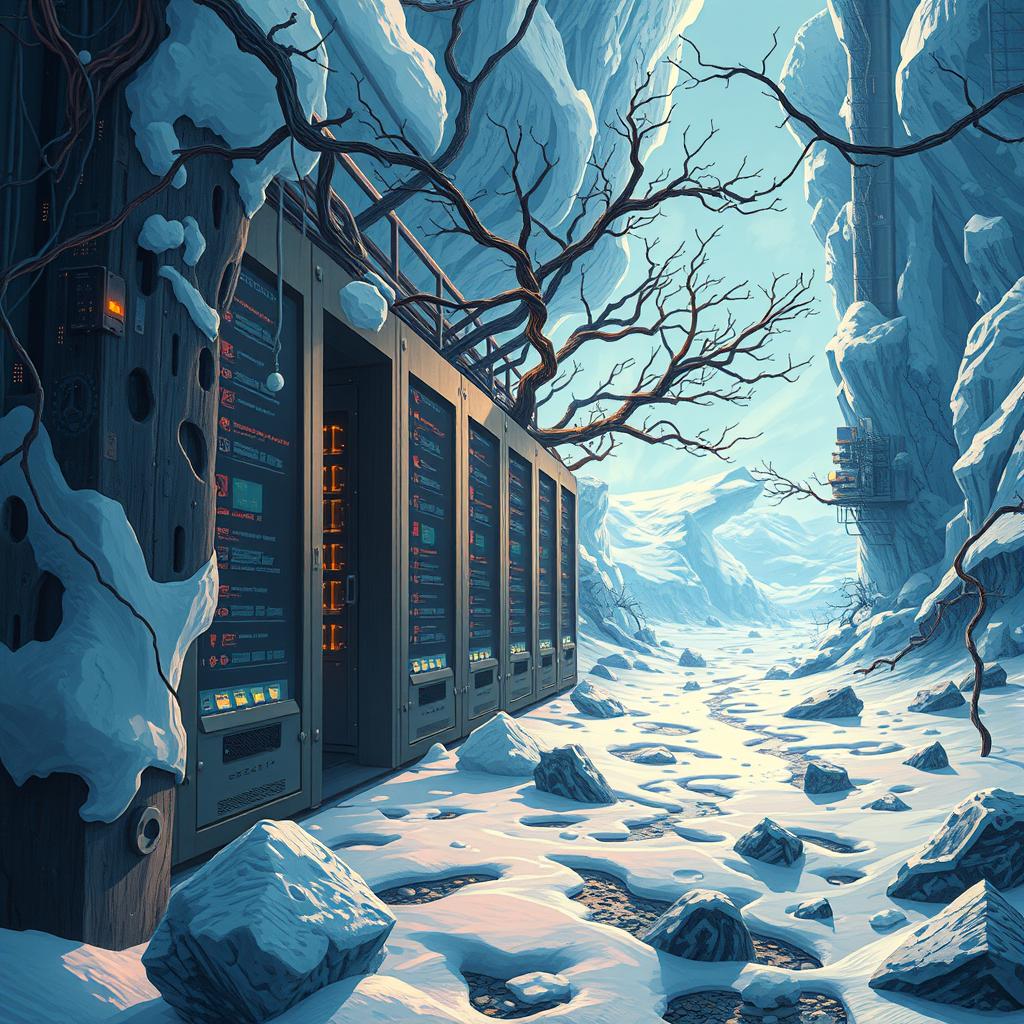
At the northern edge of Europe, what was once a niche strategy is turning into a template. Meta’s Luleå complex in northern Sweden — just south of the Arctic Circle — was an early experiment in using cold air and abundant hydropower to slash cooling and electricity costs. The campus, largely powered by local hydro and cooled with outside air, helped establish the region as a preferred hub for digital infrastructure thanks to low energy prices and a stable grid.【1search0】 That model is now being scaled up. In 2025, Brookfield Asset Management pledged up to 95 billion SEK (about $9.9 billion) for an AI data center campus in Strängnäs, Sweden, describing it as one of Europe’s largest such projects.【1news12】 And in 2025 Microsoft, Nscale and Aker announced a roughly $6.2 billion AI infrastructure build-out in Narvik, a Norwegian port town more than 200 km north of the Arctic Circle, chosen specifically for its cheap hydropower, cool climate and low local electricity demand.【1search6】
These Arctic and near-Arctic builds are a direct response to tightening conditions elsewhere. The International Energy Agency estimates data centers consumed roughly 415 TWh of electricity in 2024 — about 1.5% of global use — and warns that AI-driven accelerator adoption could push that sharply higher this decade.【0search6】 In Europe, Ofgem has warned that 140 proposed data centers in Britain alone could require around 50 GW of capacity, more than current national peak demand, forcing the government to prioritize certain AI sites and fast-track their grid connections.【0news13】
In the United States, the boom in AI infrastructure is already colliding with local resistance and physical limits. According to recent reporting, US data center projects are being delayed or cancelled amid grid-connection queues that can stretch to 12 years, transformer and materials shortages, and mounting community opposition over land, noise and water use.【0news12】 Those pressures make remote regions with surplus renewable power — from Scandinavian hydropower belts to Iceland’s geothermal grid — increasingly attractive, despite higher construction and connectivity costs.
But cheap electrons in the Arctic do not solve the other half of AI’s cost crisis: hardware. The compute race has shifted the bottleneck from GPUs themselves to the high-bandwidth memory and packaging technologies that make them useful. Each new generation of AI accelerators packs more memory — Nvidia’s latest data center chips come with up to 192 GB of HBM, while upcoming Rubin superchips are expected to need as much as 288 GB.【0search0】 That appetite is colliding with rigid supply.
Just three firms — SK Hynix, Samsung and Micron — manufacture HBM at scale. Analysts and company disclosures suggest their AI-focused output for 2026 is effectively sold out to cloud providers and chipmakers already, with Micron and SK Hynix both indicating they have pre-committed their annual capacity to AI customers.【0search0】【0search1】 Industry data compiled by logistics firm Everstream shows DRAM inventories plunging from around 17 weeks in late 2024 to as little as two to four weeks by October 2025, while memory prices rose roughly 50% in the last quarter of 2025 and are forecast to climb another 40–50% by early 2026.【0search1】
Advanced packaging is a second choke point. Building modern AI accelerators requires processes such as TSMC’s CoWoS (Chip-on-Wafer-on-Substrate), where capacity remains “very tight” and is booked out through at least 2025–26, according to recent briefings to investors from TSMC and Nvidia.【0search2】 Even when wafers and HBM are available, a lack of packaging slots can prevent them from becoming usable chips, effectively putting a ceiling on global AI compute growth.
The result is a cost structure that looks less like cloud computing and more like heavy industry. Energy-related expenses now account for an estimated 30–40% of AI infrastructure spending, with rising GPU power draw and cooling overheads pushing up operational costs.【0search5】 On the capital side, DRAM contract prices have surged more than 170% year-on-year as of early 2026, according to recent market analysis, handing memory producers pricing power once reserved for dominant software platforms.【0search0】
For AI labs and enterprises, these constraints translate into stark choices. Some may throttle model sizes or training cadence to stay within power and budget envelopes. Others will centralize on the few clouds and sovereign programs able to lock in long-term power contracts, secure scarce HBM supply and finance multi-billion-dollar Arctic builds.
The broader risk is a two-speed AI world: one tier of hyperscalers and state-backed initiatives that can afford to chase the latest chips into the Arctic, and a long tail of companies forced to rely on older hardware, smaller models or aggressive cost-optimization via API aggregators and inference-efficiency tools. As regulators weigh how to manage data center energy use and emissions, that divide will shape not just who leads in AI research, but where the environmental and economic impacts of the technology are felt.
Tags